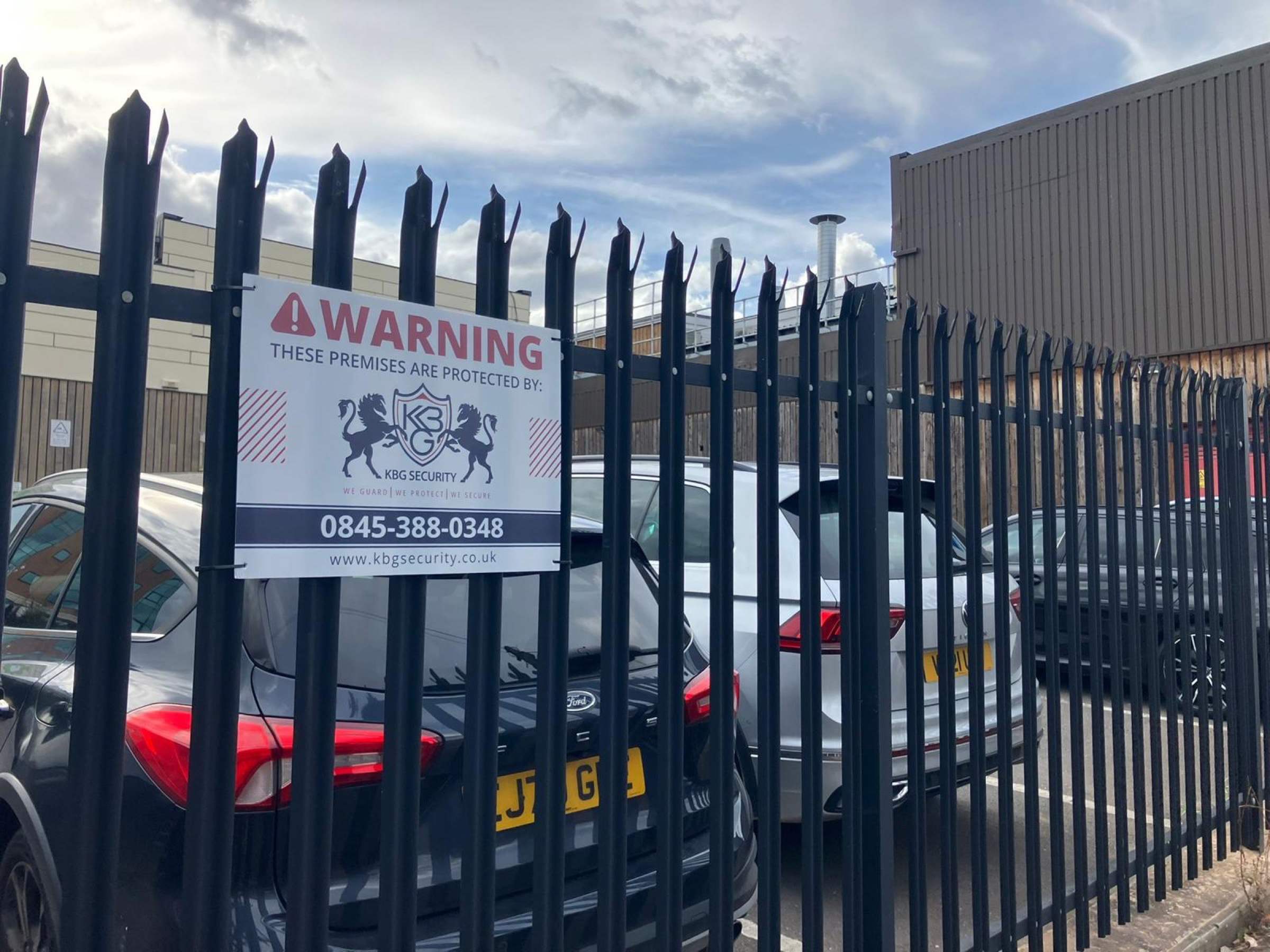
Trailer and load theft is stopped by controlling who enters and leaves the yard, checking every driver and collection against what was booked, keeping loaded trailers secure and watched, and making sure the yard is never left unattended out of hours. A gatehouse officer, good yard procedures, monitored CCTV and night patrols together close most of the gaps thieves use.
How trailer and load theft happens
Thieves target logistics sites because the goods are already packed, palletised and ready to move. The most common methods we see described across the industry include:
- Curtain slashing to see what a trailer holds, then returning for the load.
- Whole trailers coupled up and driven away from yards or nearby parking.
- Fictitious collections, where criminals pose as a genuine haulier to collect a booked load.
- Fuel theft from tractor units and reefer units parked overnight.
- Insider involvement, where someone tips off thieves about high value loads.
- Theft from vehicles in lay-bys and unsecured parking near the site.
Control the gate
The gatehouse is the single most important control on a logistics site. Every vehicle in and out should be stopped, checked against a booking and logged. That includes staff cars, contractor vans and visitors, not only trucks. A gatehouse officer who knows the routine will notice a vehicle that does not fit.
Out of hours, the gate should be closed and controlled. A barrier left up overnight turns a secure yard into a car park anyone can use.
A gatehouse is only as good as the instructions behind it. Write down exactly what the officer checks for each vehicle type, what documents they ask for, who they call when something does not match and what they do if a driver refuses. Include contact numbers for transport planners and the duty manager outside office hours.
Keep the instructions short enough to follow at 4am, and review them whenever processes change. Check compliance with spot checks and by comparing the gate log with bookings.
Verify every driver and collection
Fictitious pick ups rely on people not checking. A simple process makes them far harder:
- Collections booked in advance with the haulier’s details, vehicle registration and driver name.
- Driver identity checked against photo ID at the gate.
- Registration checked against the booking, including the trailer number where known.
- Any late change of driver or vehicle confirmed directly with the haulier using known contact details, not those given by the driver.
- Paperwork checked against the load before the trailer leaves.
- Seal numbers recorded and checked at departure.
Yard management and loaded trailers
Loaded trailers left overnight are the biggest prize. Park them inside the secure yard, ideally back to back or nose to a wall so doors cannot be opened, and in view of cameras. Use kingpin locks and wheel clamps where possible. Keep an up to date yard plan so security knows which trailers are loaded and which are empty.
Fuel is a growing target. Keep units in lit areas, consider locking fuel caps and avoid leaving vehicles full overnight where practical.
CCTV, lighting and perimeter
Cameras should cover the gate, the yard, the dock doors and the perimeter. Number plate recognition at the gate creates a reliable record of every vehicle movement. Monitored CCTV turns that coverage into a response, with an operator who can challenge intruders and call out help.
Good lighting and a sound fence matter just as much. Check the perimeter regularly for cut fencing, especially at the back of the site where it borders open land or other units.
Night and weekend cover
Many logistics sites run around the clock. Those that do not are most exposed at night and over weekends. A static guard in the gatehouse with regular yard patrols is the strongest option for high value stock. For lower risk sites, mobile patrols at random times, monitored CCTV and alarm response may be enough. Peak trading periods, such as the run up to Christmas, often justify extra cover.
Working with the wider supply chain
Theft risk does not end at your gate. Share concerns with hauliers, especially about where drivers park before and after collection. Industry groups such as TAPA publish security standards for facilities and trucking that many shippers ask for. Report thefts to the police promptly, and record crime reference numbers for insurers.
Vet your own people too. Gatehouse officers, yard shunters and warehouse staff can all see what is loaded and when. Screening and access control reduce the risk of information leaking out.
Signs your yard may be under watch
Thieves often look before they act. Brief officers and staff to report:
- Vehicles parked near the site for long periods with people inside.
- Unknown people photographing the gate, fence or yard.
- Unusual calls asking about collection times or loads.
- Damage to curtains on parked trailers, even without a theft.
- Small cuts or gaps appearing in the perimeter fence.
Warehouse and logistics security from KBG
KBG Security Solutions provides gatehouse officers, yard patrols, mobile patrols, CCTV monitoring and alarm response for warehouses and distribution centres across the West Midlands, from our head office in West Bromwich with a 24 hour control room. Officers are SIA licensed and vetted to BS 7858, and we are an SIA Approved Contractor for security guarding. We work to written assignment instructions so your gate procedures are followed on every shift.
We will review your gate, yard and out of hours arrangements after a free site survey. Call 0845 388 0348.