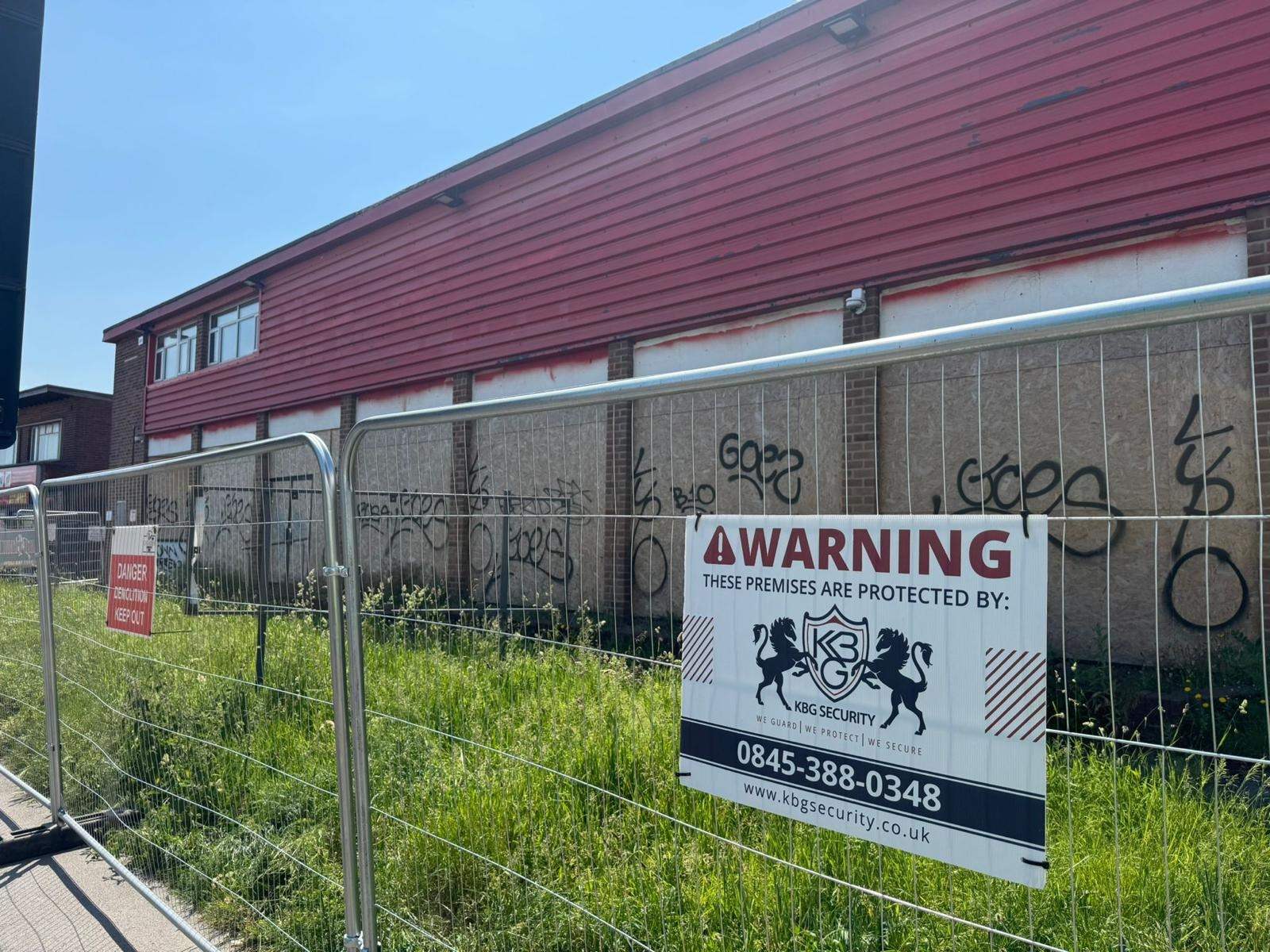
The right security for a vacant property depends on its value, location, condition and how long it will stay empty. Low risk buildings may need only regular mobile patrols with inspection reports. Higher risk sites usually need monitored CCTV, and the highest risk ones need a static guard at least overnight. Check your insurer’s unoccupancy conditions first, because they often set the minimum.
Why empty buildings are targeted
An empty building attracts attention quickly. Metal thieves go for copper pipe, cable and lead. Fly tippers use yards. Vandals and arsonists see an easy target. People may try to occupy the building. Every week a property sits empty without checks, the chance of something going wrong rises, and the cost of putting it right rises too.
Damage is not always deliberate. A burst pipe in a building nobody visits can do serious harm before anyone notices. Good vacant property security includes inspection as well as deterrence.
Check your insurance conditions first
Most commercial property policies change when a building becomes unoccupied, often after a month or two. Common conditions include weekly or more frequent inspections, written records of each visit, draining water systems, removing combustible waste, keeping the alarm working and securing doors and windows. Some insurers name specific measures for higher risk properties.
Read the unoccupancy clause carefully, or ask your broker. If a claim is made and the conditions were not met, the insurer may refuse to pay. Make sure whatever security you choose produces the records your insurer will want to see.
Option 1: mobile patrols and inspections
Mobile patrols suit most vacant properties as a starting point. An officer visits at random times, checks the perimeter and access points, looks for signs of entry, and on agreed visits carries out an internal inspection. Each visit produces a time stamped report, often with photographs, which is the evidence your insurer will ask for.
Patrols are cost effective and flexible. Their limit is that nobody is there between visits. A determined intruder who watches the pattern can work around it, which is why visit times should be randomised.
Option 2: temporary and monitored CCTV
Temporary CCTV towers can be placed on a site without mains power and monitored remotely. When the system detects movement, an operator reviews the image, can issue an audio warning and calls out a response or the police. This gives continuous cover at a lower cost than a guard.
CCTV works best when combined with physical security and a response arrangement. Cameras that record but are never watched will help with an insurance claim, but they will not stop the damage.
Option 3: static guards
A static guard gives you a person on site who can respond immediately, deal with visitors and contractors, and patrol the building. It is the highest cost option and the most effective deterrent. It makes sense for high value or high risk properties, buildings in areas with known problems, sites with recent break ins, and the first few nights after a building becomes vacant or is reclaimed after occupation.
Many owners use a guard for a short period while the building is made secure, then step down to patrols and CCTV.
What about squatters?
Squatting in a residential building has been a criminal offence in England and Wales since 2012. Occupying commercial property is treated differently and is usually a civil matter, which can mean court proceedings to recover it. Either way, it is far easier to prevent occupation than to end it. Secure every entry point, visit regularly and act immediately on any sign of entry.
Officers should never try to remove occupiers by force. If a building is occupied, take legal advice and involve the police where a criminal offence is suspected.
A weekly vacant property checklist
Whatever level of security you choose, these checks should be happening and recorded:
- Perimeter fencing, gates and hoarding intact and locked.
- Doors, windows and boarding secure with no signs of tampering.
- No signs of entry, occupation, fire or fly tipping.
- Utilities isolated or managed as agreed with your insurer.
- No water leaks, roof damage or new structural problems.
- Post and free newspapers removed so the building does not look abandoned.
- Alarm and CCTV working, with any faults reported.
- Photographs and a written report filed after each visit.
Making the building secure on day one
The first days after a building becomes empty set the pattern. Before you step down to patrols or cameras, make sure the basics are done:
- Change or re key locks, and collect every key and access card from former occupiers.
- Board or screen ground floor windows and secondary doors where needed.
- Remove waste, furniture and anything that could be set alight.
- Isolate or manage utilities in line with your insurer’s conditions.
- Put up signs showing the building is protected and monitored.
- Record the condition of the building with dated photographs.
Vacant property security from KBG
KBG Security Solutions secures empty buildings for landlords, councils and developers across the West Midlands from our West Bromwich head office. We provide mobile patrols with inspection reports, temporary CCTV, static guards and keyholding, all supported by a 24 hour control room. We are an SIA Approved Contractor for security guarding and our officers are vetted to BS 7858.
We will look at the building, review your insurer’s conditions and recommend the right mix after a free site survey. Call 0845 388 0348.