Keyholding means a security company holds your keys and attends when needed. Alarm response means an officer goes to your site when the alarm activates. Mobile patrols are planned visits to check the site at set or random times. Most businesses combine two or all three to cover the hours when nobody is on site.
The out of hours problem
Most commercial premises are empty for more hours of the week than they are occupied. When the alarm goes off at 2am, someone has to deal with it. Too often that someone is a manager who lives nearby, who drives in alone, walks into a building that may still have intruders inside and has no training for what they might find.
Keyholding, alarm response and mobile patrols exist to take that job away from your staff. They are different services, though, and buyers sometimes pay for one expecting the benefits of another.
What is keyholding?
A keyholding service holds a set of keys to your premises securely, and uses them when needed. Keys are usually coded so they cannot be linked to your address if lost. Keyholding on its own is about access: letting in an engineer, a contractor or emergency services, or opening up when a staff member has lost their keys.
Keyholding for reward is licensable by the SIA, so the officers doing it need the right licence. Many alarm monitoring centres and insurers expect named keyholders who can attend within a reasonable time, and a professional keyholder meets that need.
What is alarm response?
Alarm response is the active part. When your intruder or fire alarm activates, the alarm receiving centre contacts the response company, and an officer attends. On site they check the perimeter, look for signs of entry, enter if safe, search the premises, reset the alarm if appropriate and secure the building. If there is a break in, they call the police and stay on site until it is made secure.
Alarm response needs keyholding to work properly, because the officer needs to get in. That is why the two are usually sold together.
What are mobile patrols?
Mobile patrols are proactive. An officer in a marked vehicle visits your site at agreed or randomised times and checks it. That might be a walk of the perimeter, a check on doors and windows, a look at the yard and vehicles, or an internal patrol. Each visit is logged with a time stamped report.
Patrols deter because they are visible and unpredictable. They also find problems before they become incidents: a gate left open, a light not working, a fence panel lifted, or signs that someone has been looking around.
Keyholding, alarm response and patrols side by side
Here is the simplest way to compare them:
- Keyholding: we hold your keys and use them when needed. Best for access and as the base for alarm response.
- Alarm response: an officer attends when your alarm activates. Best for alarmed premises where staff currently attend.
- Mobile patrols: visits at set or random times. Best for deterrence and early warning on empty or lower risk sites.
- Lock and unlock: an officer opens or secures the site at fixed times. Best where opening or closing alone is a lone working risk.
- Static guarding: an officer on site for the whole shift. Best for high risk or high value sites, or where gate and visitor control is needed.
Which out of hours cover does my site need?
Start with the alarm. If you have an alarm and staff currently attend activations, keyholding and alarm response is the first step. It is usually the best value change a small business can make.
Then look at the gaps. If your site is empty for long periods, has an open yard, or has had trespass or theft, add mobile patrols. If you need someone to open and close at set times, add lock and unlock. If the site holds stock or plant worth more than the cost of a guard, or the risk is high, consider static guarding at least for the riskiest hours.
Vacant buildings often need patrols plus monitored CCTV, as there may be no working alarm at all. A security risk assessment will tell you which combination fits.
Questions to ask a keyholding company
Before you hand over your keys, ask:
- How are my keys stored, coded and signed out?
- Are attending officers SIA licensed for key holding or guarding?
- What will the officer do on arrival, and what will they not do?
- How do you report each attendance to me?
- What happens if a break in is found in the middle of the night?
- Is the patrol schedule random, and how can I see it was followed?
Alarms, the police and false activations
Police response to monitored intruder alarms is managed under National Police Chiefs’ Council policy, and police will only attend certain alarm types. Repeated false alarms can lead to police response being withdrawn from a site. Check the current position with your alarm installer.
That is another reason to have a keyholder who attends every activation. A trained officer can find the cause of a false alarm, such as a faulty detector, a door not fully closed or a balloon left drifting in an office, and report it so it can be fixed before it happens again.
Keyholding, alarm response and patrols from KBG
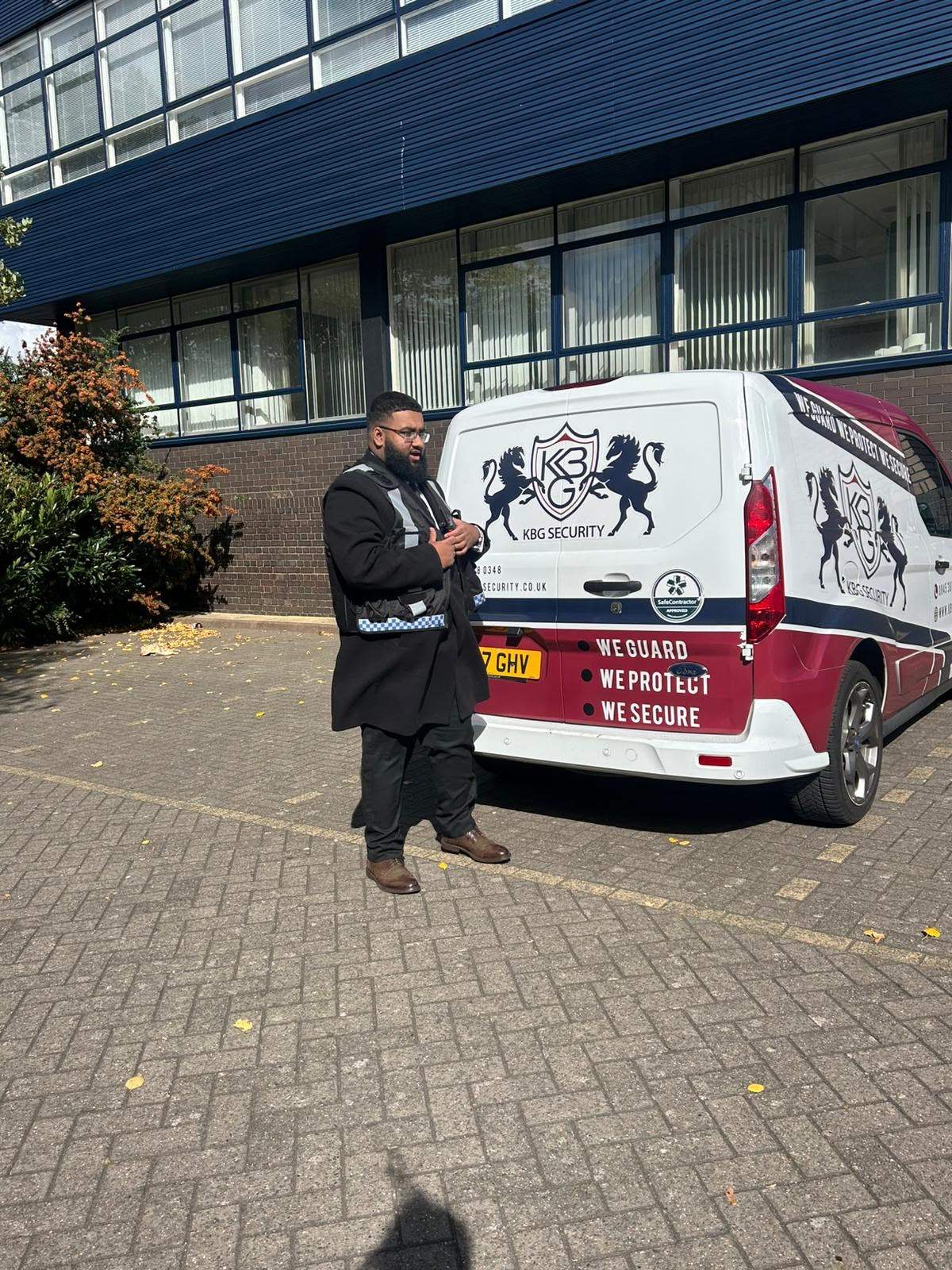
KBG Security Solutions provides keyholding, alarm response, mobile patrols and lock and unlock from our West Bromwich head office, with a 24 hour control room that logs every attendance. Officers are SIA licensed and vetted to BS 7858, and you get a written report after each visit. We are an SIA Approved Contractor for security guarding.
We will look at your site and alarm arrangements in a free site survey and recommend only what you need. Call 0845 388 0348.