A good construction site security plan covers the perimeter, access, plant and materials, out of hours cover and reporting, and it changes as the build changes. Under CDM 2015 the principal contractor must take reasonable steps to stop unauthorised people getting onto site. This checklist sets out what to check at each stage.
Why construction sites are targeted
Construction sites hold valuable, portable and often unmarked property: plant, tools, cable, copper, fuel and materials. They are empty for long periods, often unlit, and change shape every week. Trespassers include thieves, but also children, urban explorers and people looking for shelter. A child injured on a site at the weekend is as serious a failure as a stolen excavator.
CDM 2015 places a duty on the principal contractor to take reasonable steps to prevent unauthorised access, and HSE guidance stresses protecting the public, especially children. Security is part of your health and safety duties, not a separate budget line.
Sites next to homes, schools or busy footpaths need extra thought. Check for anything that would attract children, such as open excavations, stacked materials they could climb or machinery left accessible. Keep hoarding in good repair and lit where it borders public routes. Brief officers to deal politely with neighbours, as they are often the first to report suspicious activity if they know who to call.
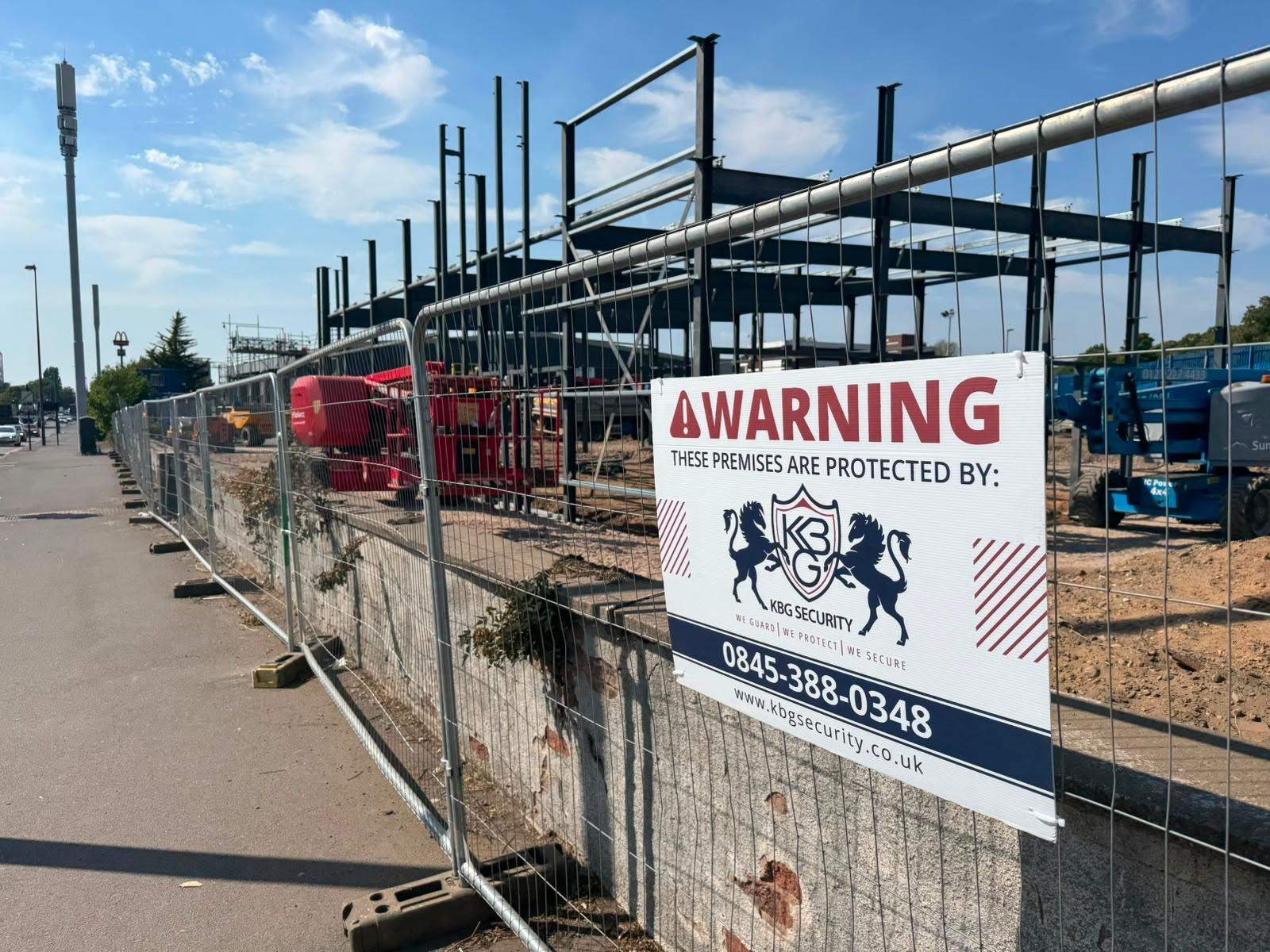
Display a contact number on the hoarding so neighbours and passers by can report problems out of hours.
Before the site opens
Most site security problems start in the first weeks, when fencing is incomplete and nobody has a routine yet. Plan these before mobilisation:
- Carry out a security risk assessment that looks at the surrounding area, previous incidents and what will be stored on site.
- Decide who owns security on site and who the contractor reports to.
- Plan the perimeter line, gate positions and delivery routes before hoarding goes up.
- Agree out of hours cover and response arrangements before the first plant arrives.
- Register valuable plant on a marking and registration scheme such as CESAR and record serial numbers.
- Write assignment instructions for any guards or patrols, including emergency contacts and escalation steps.
Perimeter and access control checklist
The perimeter is your first line of defence. Walk it at the start and end of every day.
- Hoarding or fencing complete, with no gaps, lifted panels or climbing aids.
- Heras panels clamped and braced, with couplers on the inside.
- Gates locked with good quality locks and chains, and keys controlled.
- Signage on the perimeter showing the site is private, monitored and dangerous.
- A single controlled entrance for people, with sign in and induction checks.
- Vehicle gates manned or controlled during deliveries.
- Scaffold ladders removed or boarded out of hours.
Plant, tools and materials
Most losses come from the same few items. Make them hard to take:
- Plant immobilised, keys removed and stored securely off site or in a locked safe.
- Plant parked together, inside the compound, ideally in view of cameras.
- Small tools locked in steel containers with shielded locks.
- Fuel bowsers locked and positioned away from the perimeter.
- Cable and copper delivered close to when it is needed, not left on site for weeks.
- High value deliveries checked against the delivery note and stored immediately.
Lighting, CCTV and detection
Lighting helps cameras and guards see, and it makes the site less attractive. Temporary CCTV towers give you coverage of gates, compounds and plant, and remote monitoring means a person sees an alert and acts on it. Cameras alone record a problem. Monitored cameras with an agreed response can stop one.
Check that coverage follows the build. A tower placed for groundworks may be in the wrong place once the frame goes up. Review camera positions whenever the layout changes.
Out of hours guarding and patrols
Evenings, weekends and holiday shutdowns are when most incidents happen. Match the cover to the risk:
- Static guards for high value phases, live sites next to busy public areas, or sites with recent incidents.
- Mobile patrols for lower risk sites, with random visit times and a report after each visit.
- Lock and unlock service so no site manager has to open or close alone.
- Keyholding and alarm response so an officer, not your staff, attends activations.
- Extra cover over Christmas and other long shutdowns.
Reporting and review
Insist on written reports. You should receive patrol logs, incident reports and notes of any defects found, such as a lifted fence panel or a gate left unlocked by a subcontractor. Use them in site meetings. If the same issue appears every week, fix the cause.
Review the security plan at each major stage of the build. Groundworks, frame, envelope and fit out all carry different risks, and fit out often carries the highest value of stealable stock.
Common construction site security mistakes
These are the problems we see most often when we take over security on a live project:
- Security planned after the first theft rather than before mobilisation.
- Gates left open during deliveries with nobody watching them.
- Subcontractors leaving tools and materials outside the compound overnight.
- Camera towers left in their original position after the layout changed.
- Keys to plant left in cabs or in an unlocked site office.
- No clear instructions for guards, so each officer does it differently.
- Patrol reports filed but never read.
Construction site security from KBG
KBG Security Solutions supplies construction security across the West Midlands and beyond from our head office in West Bromwich. We hold Constructionline Gold and CHAS Elite, we are an SIA Approved Contractor, and we have worked for principal contractors including John Sisk & Son. We provide gatehouse officers, night guards, mobile patrols, temporary CCTV and lock and unlock, all backed by a 24 hour control room and written assignment instructions.
We will walk your site and give you a plan and a price after a free site survey. Call 0845 388 0348.